Getting started · 3 min read
Incline walking: easy cardio without speeding up
Walking uphill raises the energy a walk takes without making you walk faster. In a lab study of 12 adults with obesity, walking slowly up a moderate incline was a
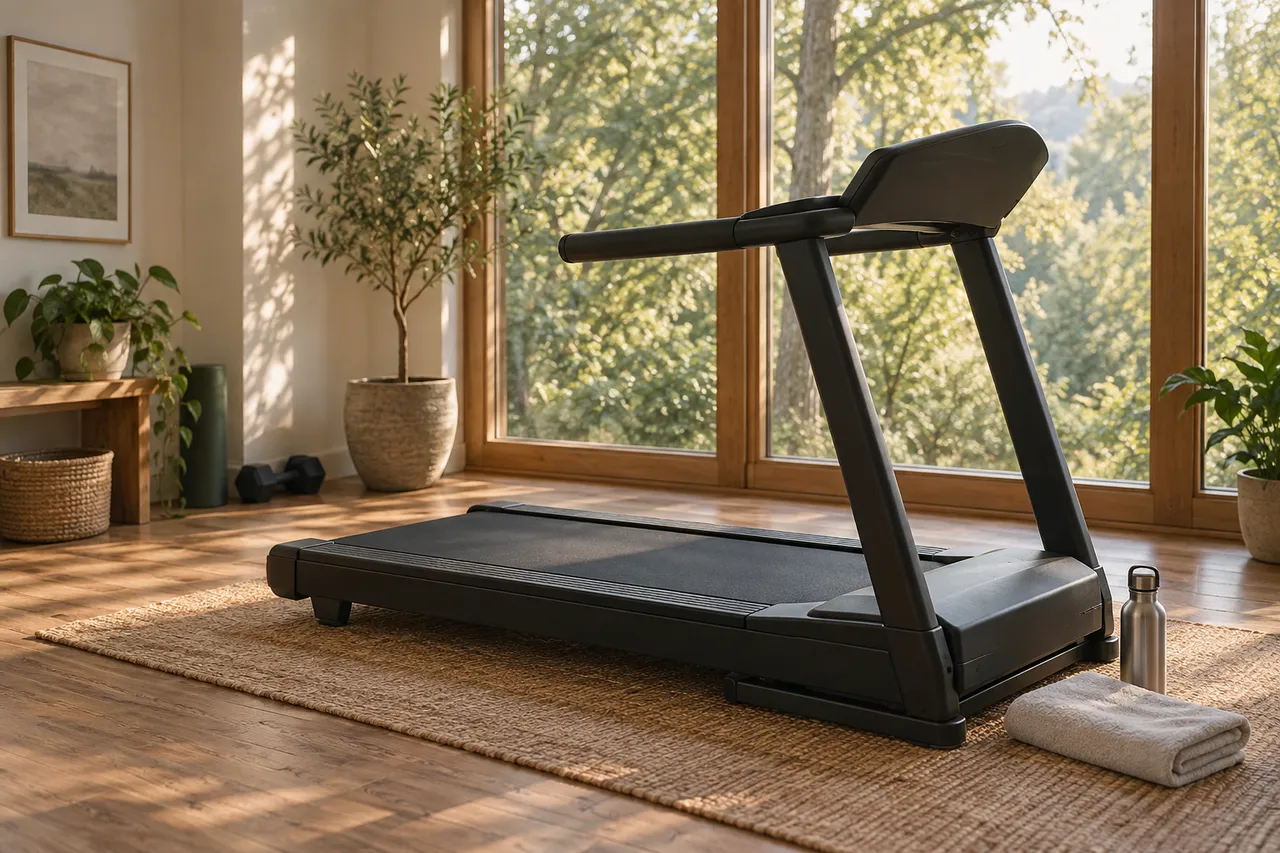
Why incline makes walking harder
Walking up a slope means lifting your body as well as moving forward, so the same speed takes more energy. A 2025 study of the
That's why a treadmill incline can turn an easy walk into moderate cardio without a faster pace.
Evidence: Wong et al. (2025): the
Slow and uphill versus fast and flat
In a lab study, 12 adults with obesity walked on a treadmill at speed and slope combinations from flat to 9 degrees. Every combination tested came out at a moderate intensity, 48.5% to 59.8% of their VO₂ max.
Walking slowly uphill put less load on the legs than walking fast on the flat. Walking up a
Evidence: Ehlen et al. (2011): energetics and biomechanics of inclined treadmill walking in obese adults
Set the incline by heart rate, not by number
The same incline is a different effort for different people. The CDC notes that an activity vigorous for someone of average fitness may be only moderate for a very fit person. So instead of copying a fixed setting:
- Find your zone 2 range with the zone 2 heart rate calculator.
- Start an Apple Watch workout at a comfortable pace.
- Raise the incline a little at a time until your heart rate reaches your zone 2 range, and lower it if you go above.
The CDC describes moderate effort as being able to talk, but not sing.
Evidence: CDC: measuring physical activity intensity
Zone 2 heart rate calculator · Zone 2 treadmill workouts · The
Outdoors, hills work the same way
Walking up hills outdoors raises the effort in the same way. Apple Watch estimates VO₂ max from Outdoor Walk, Outdoor Run and Hiking workouts, but Apple's paper says an estimate needs relatively flat ground: a slope of less than 5% up or down. So a steep hill walk can be good zone 2 time without producing a VO₂ max reading; flatter walks may produce an estimate when Apple's other requirements are met.
Evidence: Apple: track your cardio fitness levels · Apple: Using Apple Watch to Estimate Cardio Fitness with VO2 max (2021)
Does incline walking count in Base?
It counts in Base if you record it as an Apple Watch workout and your heart rate sits in your zone 2 range. Base shows your zone 2 minutes as a weekly total on iPhone and Apple Watch.
Sources & further reading
Source types matter:
- Wong et al. (2025): the
12-3-30 treadmill workout compared withself-paced runningExploratory lab study · 16 adults, 14 analysed ·energy-matched sessions - Ehlen et al. (2011): energetics and biomechanics of inclined treadmill walking in obese adultsLab study · 12 adults with obesity
- CDC: measuring physical activity intensity
Public-health guidance - Apple: track your cardio fitness levelsOfficial product documentation · published September 14, 2026
- Apple: Using Apple Watch to Estimate Cardio Fitness with VO2 max (2021)Manufacturer white paper · May 2021 · Apple's design and validation data
Your
Explore the benefits and science · See how Base works · Read the privacy notice