Getting started · 4 min read
Zone 2 treadmill workouts: finding your speed and incline
There is no single treadmill speed or incline that puts everyone in zone 2. Start from an effort that is appropriate for you, adjust gradually, and use breathing and your configured
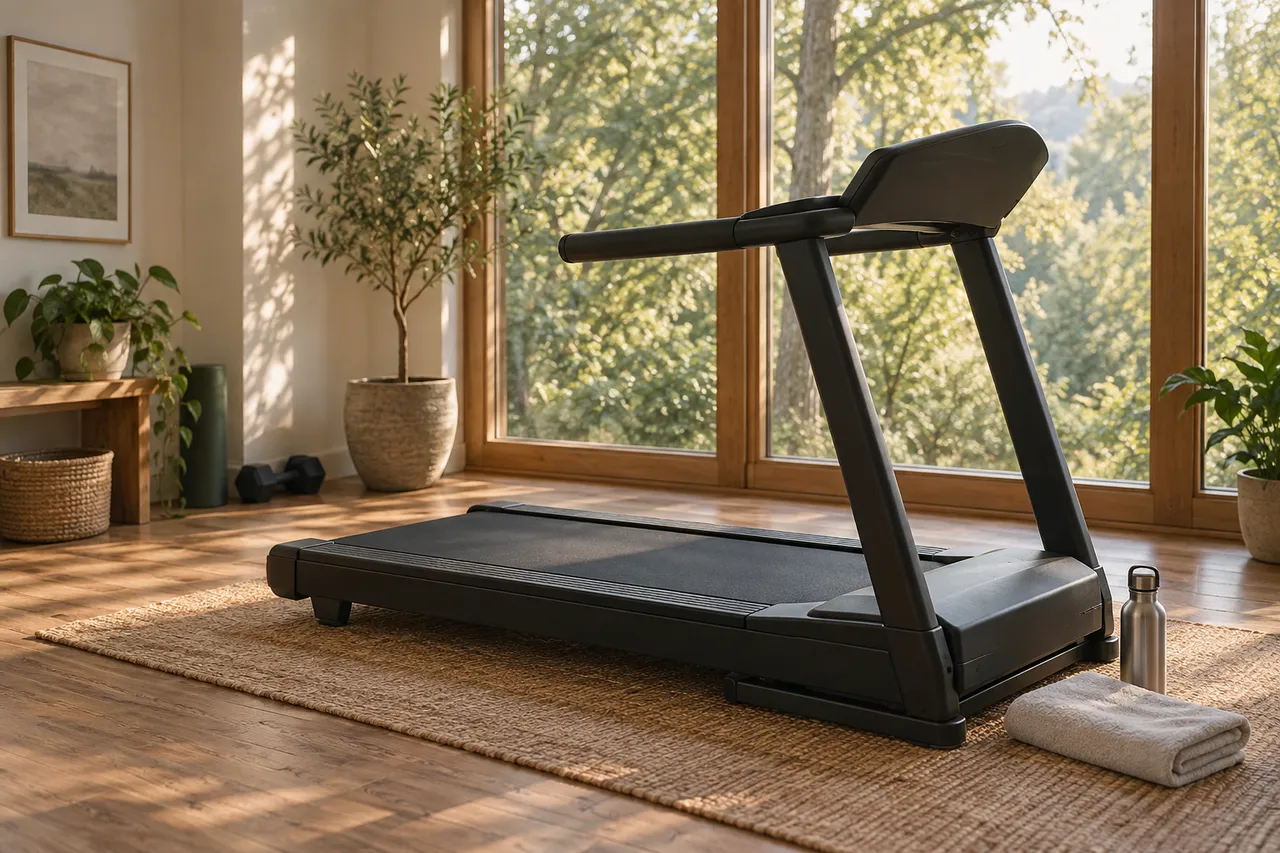
What you are building with a steady session
An easier treadmill session can be deliberate aerobic training, not merely a
The research covers broader
Evidence: Nuuttila et al. (2026):
Why ‘set it to this incline’ is incomplete advice
Treadmill settings describe the machine, not your physiology. The same speed can be a relaxed walk for one person and an unusually demanding effort for another. Adding an incline changes the task again.
Even the target
Evidence: CDC: measuring physical activity intensity · Meixner et al. (2025): individual variability in zone 2 intensity markers
A simple decision sequence
For someone already able to exercise safely, the following is a way to organize observation—not a personalized training prescription. Follow the treadmill's safety instructions and any advice from your clinician or coach.
- Begin at a comfortable setting and allow an easy start rather than jumping straight to a target number.
- Notice breathing and effort alongside the displayed heart rate.
- If an adjustment is appropriate, change one setting at a time rather than speed and incline together.
- Allow the effort to settle before judging the change. Do not keep increasing settings to force an uncertain reading into a zone.
- Ease off or stop if you feel unwell. The display is not a reason to ignore symptoms.
What to do with three common observations
These are ways to interpret a session, not a universal speed, incline or interval plan.
| What | What to check before changing |
|---|---|
| Comfortable walking stays below the displayed zone | Check the range and the session's purpose. A |
| A small incline makes breathing much harder | Ease the task rather than chasing the display. Change one setting at a time if continuing is appropriate. |
| Check Watch fit and signal coverage. Do not increase effort to compensate for missing readings. |
Record the activity you are actually doing
In Apple's Workout app, choose the workout type that matches the session; Apple specifically uses Indoor Run for treadmill running as an example. A machine's calorie or zone display is not automatically an Apple Health workout record.
Before comparing the treadmill with Base, check that a workout and usable
Evidence: Apple: improve Watch measurement accuracy
Find and review Watch
Read the signal, not just the number
The CDC describes speaking comfortably but being unable to sing as a rough check for
When breathing feels hard but the device says the effort is easy, do not treat the device as the final authority. A zone setting or a poor signal can be misleading. Review the situation rather than chasing a higher heart rate.
An example of honest workout accounting
Suppose you reserved 35 minutes for a treadmill visit. Five minutes are easy preparation, 25 are the main activity and five are winding down. Those are calendar blocks, not verified zone 2 minutes.
If the recording supports 19 minutes inside your configured zone, record that distinction honestly. The remaining time was not necessarily useless exercise; it simply was not the same metric. General health recommendations and an app's zone accounting answer different questions.
| Measure | Meaning | |
|---|---|---|
| Scheduled visit | 35 min | The time you set aside |
| Main activity | 25 min | Not automatically time in zone |
| Recorded time in zone | 19 min | Depends on settings and evidence |
Make the next session easier to understand
Keep the context simple: which activity, roughly what settings, and how the effort felt. Repeating familiar conditions can make comparisons more useful than changing every variable at once.
Base's weekly view is designed to gather the qualifying minutes from recorded workouts. It cannot make one treadmill setting right for everyone, and it does not turn a missing
Sources & further reading
Source types matter:
- Nuuttila et al. (2026):
low-intensity endurance training, fitness and cardiometabolic healthSystematic review/meta-analysis · 50 randomized studies · healthy adults18–65 · broaderlow-intensity range - CDC: measuring physical activity intensity
Public-health guidance - Meixner et al. (2025): individual variability in zone 2 intensity markersLaboratory study · 50 cyclists
- Apple: improve Watch measurement accuracyOfficial product documentation · March 10, 2026
Build the base. See your week.
Make room for the aerobic habit you want to keep. Base brings supported zone 2 minutes from recorded workouts into a clear weekly view on iPhone and Apple Watch. Your
Explore the benefits and science · See how Base works · Read the privacy notice