Benefits & evidence · 4 min read
VO₂ max test: lab, field test or your watch, and which to choose
A lab test (a cardiopulmonary exercise test) measures VO₂ max directly: you exercise on a treadmill or bike up to a maximal effort while a mask analyses your breath. Field tests estimate it from a
The four ways, compared
| Test | What | Effort | How close to |
|---|---|---|---|
| Lab test with breath analysis | Oxygen you breathe in and out, measured at a maximal effort | The lab reference itself | |
| How far you run in 12 minutes | Correlation of 0.897 with a treadmill test in 115 men | ||
| Your time for a fast mile walk, heart rate at the end, age, weight and sex | A fast walk | Correlation of 0.92 in a check group of 169 adults | |
| Apple Watch | Heart rate and motion during outdoor walks, runs and hikes | None beyond your usual workouts | About 6 points low on average for mostly younger, mostly fit adults in two studies; slightly high for older, less fit people in Apple's own, against a submaximal reference |
Evidence: Kaminsky et al. (2022): FRIEND registry reference standards for cardiorespiratory fitness · Cooper (1968): a means of assessing maximal oxygen intake · Kline et al. (1987): estimating VO2 max from a
The lab test
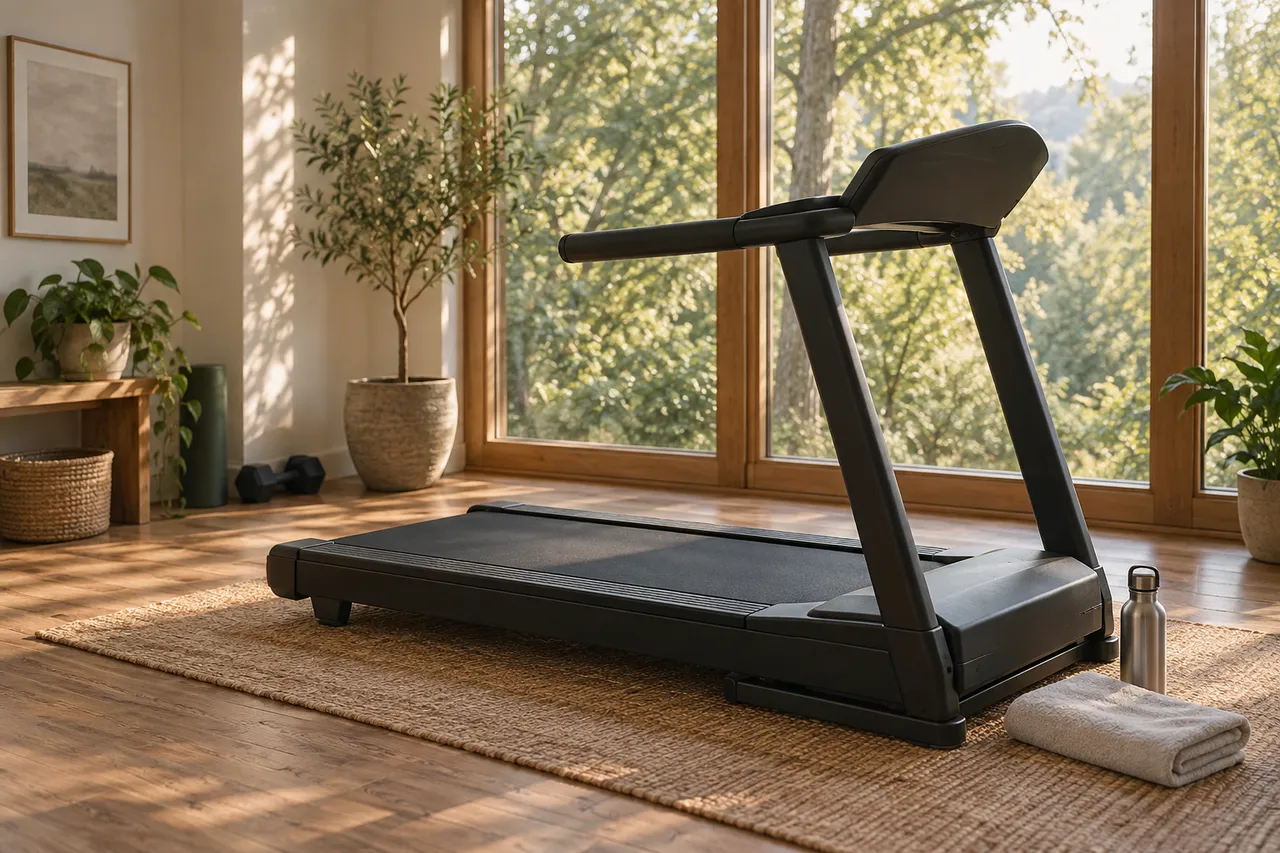
A cardiopulmonary exercise test measures the oxygen you use directly. You run on a treadmill or ride a bike while the effort rises to a maximal level, wearing a mask that analyses your breath. The FRIEND registry's reference standards and the studies that check watch accuracy use this kind of test.
It gives a measured number, not an estimate, but it takes a maximal effort and a lab visit. In FRIEND's data, middle scores were higher on a treadmill than on a bike in every age group, so compare a lab result with norms for the same kind of test.
Evidence: Kaminsky et al. (2022): FRIEND registry reference standards for cardiorespiratory fitness · Lambe et al. (2025): accuracy of Apple Watch VO2 max estimates · Lambe et al. (2026): accuracy of VO2 max estimates from Apple Watch Series 10
The 12-minute run (Cooper test)
Run as far as you can in 12 minutes. Kenneth Cooper tested 115 US Air Force men on this run and on a treadmill test of maximal oxygen use; the correlation between the two was 0.897. The distance is then turned into an estimate of VO₂ max.
It needs a measured course and a hard
Evidence: Cooper (1968): a means of assessing maximal oxygen intake
The one-mile walk (Rockport test)
Walk one mile as fast as you can, then note your time and your heart rate at the end. An equation uses those with your age, weight and sex to estimate VO₂ max. It comes from a study of 343 healthy adults aged 30 to 69 who also did a treadmill test: 174 of them were used to build the equation, and in the other 169 the correlation with the treadmill result was 0.92.
It's a fast walk rather than an
Evidence: Kline et al. (1987): estimating VO2 max from a
Apple Watch
Apple Watch Series 3 or later estimates VO₂ max, shown as Cardio Fitness, from Outdoor Walk, Outdoor Run and Hiking workouts. It needs no special session, but a single reading can sit well away from the lab: in two treadmill studies of mostly younger, mostly fit adults it read about 6 mL/kg/min low on average, and in Apple's own validation of 221 older, less fit people, against a submaximal reference, it read slightly high. Repeated estimates from the same Watch are fairly steady, which makes it most useful for the trend.
Evidence: Apple: track your cardio fitness levels · Lambe et al. (2025): accuracy of Apple Watch VO2 max estimates · Lambe et al. (2026): accuracy of VO2 max estimates from Apple Watch Series 10 · Apple: Using Apple Watch to Estimate Cardio Fitness with VO2 max (2021)
Apple Watch VO₂ max: how to get a reading · How accurate is Apple Watch VO₂ max?
Which test to choose
- For a directly measured number: a lab test.
- For a field estimate without a watch: the
one-mile walk, or the12-minute run if you're used to running hard. - For tracking change over months: repeat the same method. Numbers from different tests aren't directly comparable, and repeated Watch estimates are fairly steady.
A lab test and the
Evidence: Kaminsky et al. (2022): FRIEND registry reference standards for cardiorespiratory fitness · Apple: Using Apple Watch to Estimate Cardio Fitness with VO2 max (2021) · American Heart Association: target heart rates chart
Build your base. Watch your VO₂ max trend.
Base counts your zone 2 minutes from recorded Apple Watch workouts and shows them as a weekly total on iPhone and Apple Watch. Your Watch keeps estimating VO₂ max from your outdoor walks, runs and hikes, so the trend comes without a test day.
Keep the easy minutes coming week after week, and check your Cardio Fitness every month or so. Base does not measure VO₂ max itself, and it cannot promise how far your number will move.
Sources & further reading
Source types matter:
- Kaminsky et al. (2022): FRIEND registry reference standards for cardiorespiratory fitnessLaboratory reference standards ·
cross-sectional - Cooper (1968): a means of assessing maximal oxygen intakeField test study · 115 US Air Force men ·
12-minute run against a treadmill test - Kline et al. (1987): estimating VO2 max from a
one-mile track walkField test study · 343 healthy adults aged 30 to 69 ·one-mile walk against a treadmill test - Lambe et al. (2025): accuracy of Apple Watch VO2 max estimatesIndependent validation study · 30 adults, 28 analysed · maximal treadmill test with breath analysis
- Lambe et al. (2026): accuracy of VO2 max estimates from Apple Watch Series 10Independent validation study · 40 adults, 35 analysed · maximal treadmill test with breath analysis
- Apple: Using Apple Watch to Estimate Cardio Fitness with VO2 max (2021)Manufacturer white paper · May 2021 · Apple's design and validation data
- Apple: track your cardio fitness levelsOfficial product documentation · published September 14, 2026
- American Heart Association: target heart rates chart
Public-health guidance · last reviewed August 12, 2024 · checked November 13, 2026
Your
Explore the benefits and science · See how Base works · Read the privacy notice